Norsk Folkemuseum Review: Is Oslo's Open-Air Museum Worth Visiting?
If you're planning a trip to Oslo and wondering whether the Norsk Folkemuseum deserves a spot on your itinerary, I can tell you straight away: yes, it does. I visited recently and want to share exactly what to expect — from getting there and buying tickets, to the buildings, the accessibility challenges I noticed, and how it stacks up against the UK's own Beamish Museum — so you know precisely what you're getting before you go.
Norsk Folkemuseum, officially the Norwegian Museum of Cultural History, is one of Europe's largest and oldest open-air museums, sitting on the leafy Bygdøy peninsula about 5km west of Oslo city centre. Its roots go back to 1881, when King Oscar II established a private open-air collection at Bygdøy, which was later merged into the Norwegian Museum of Cultural History in 1907, making it one of the earliest museums of its kind anywhere in the world. Today, it's home to more than 150 relocated buildings, a 12th-century stave church, and exhibitions covering Norwegian life from 1500 to the present day. This review covers the practical stuff — cost, transport, tickets, accessibility — as well as what you'll actually see and experience once you're through the gate. 🏛️
How to Get to Norsk Folkemuseum from Oslo City Centre
Bygdøy is a peninsula, so it's not quite as central as some of Oslo's other attractions, but it's still an easy trip.
By Taxi
I took a taxi from Oslo centre, and it cost around 137 NOK. That works out to roughly:
£10.50 GBP
$13.50 USD
(Exchange rates move around, so treat these as ballpark figures rather than exact conversions.) A taxi is quick, comfortable, and worth considering if there are two or more of you splitting the fare, since it removes any guesswork about bus routes or timings.
By Bus
If you'd rather save the money, the number 30 bus runs from Oslo city centre out to Bygdøy and stops close to the museum. It's the cheaper option and a solid choice if you're travelling on a budget or already have a valid Oslo travel ticket.
By Ferry
Worth noting for warmer months: there's also a seasonal ferry from Oslo City Hall (Rådhusbrygge) to Bygdøy, a scenic way to combine your journey with fjord views.
Norsk Folkemuseum Ticket Prices 💰
Here's the bit everyone wants to know before they commit to a visit.
An adult ticket costs 200 NOK, which converts to approximately:
£15.25 GBP
$19.50 USD
Again, these are approximate — currency conversion rates shift day to day, so check a live converter closer to your travel date for an exact figure. For a museum of this size, with well over 150 buildings and multiple exhibitions included in the price, I'd say it's fair value, especially if you plan on spending a few hours there.
Booking Your Ticket
I turned up without pre-booking and honestly wasn't sure how busy it would be. No need to worry — the booking desk was quick and easy. I bought my ticket as a walk-in with no real queue, and was through in a couple of minutes. If you prefer to sort things in advance, tickets can also be booked online through the museum's website before you travel.
Getting Into the Museum: Shops and Turnstiles
Once you've got your ticket, there are a couple of things worth knowing about the entrance area.
Two Shops at the Entrance
Before you even get into the open-air section, there are two shops near the entrance:
The museum shop — sells books, souvenirs, and gifts related to the museum and Norwegian culture.
A Nordic-themed clothing shop — stocking mainly Scandinavian-style clothing, which is worth a browse even if you're not planning on buying anything.
Turnstile Entry
Entry itself is via a turnstile, where you simply scan your ticket to get through. It's a smooth, modern system — no faff, and it moves people through efficiently even when it's busy.
What's Inside the Open-Air Museum 🏘️
This is the heart of Norsk Folkemuseum, and it's genuinely impressive in scale. The site is made up of buildings relocated from all over Norway and rebuilt here, piece by piece, to recreate different periods, regions, and social classes of Norwegian life — everything from wealthy town houses to humble farm cottages, sitting side by side.
The Stave Church from Gol — The Star Attraction ⛪
If you only remember one building from your visit, it'll be this one. The Stave Church from Gol dates from roughly 1200 and originally stood in Hallingdal, a valley region a few hours north-west of Oslo. It was due to be knocked down and replaced in the 1880s, but a Norwegian heritage society stepped in, bought the timber, and King Oscar II personally funded its relocation and rebuilding at Bygdøy in 1884 — making it the founding building of what would eventually become this entire museum.
Up close, the church is covered in carved dragon heads, plant motifs, and medieval runic inscriptions, some of which are still legible today. It sits on raised ground within the "historic village" part of the museum, surrounded by farm buildings, so you approach it past grass-roofed houses and wooden fences rather than finding it stuck in isolation. Give yourself proper time here — it's easy to walk straight past the carved portals without stopping to look closely, and that's where a lot of the detail is.
Farmhouses, Town Houses, and a 20th-Century Apartment Block
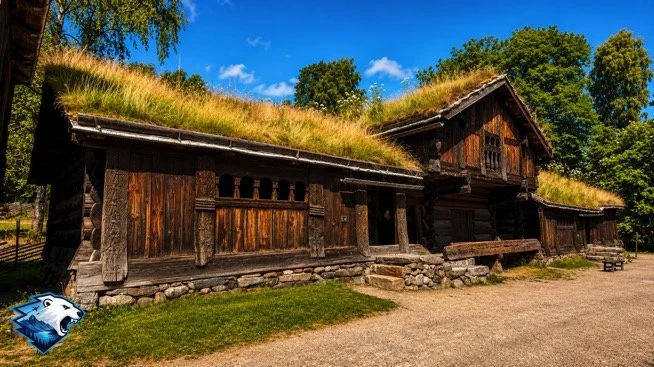
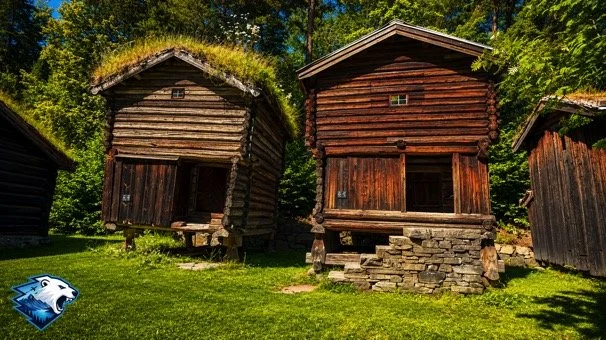
Beyond the stave church, the open-air area is organised loosely by region and era. You'll wander past traditional farm buildings from rural Norway, complete with turf roofs, as well as a reconstructed apartment building that shows how ordinary Norwegian families lived through different decades of the 20th century — a nice contrast to the medieval and rural exhibits, and a good reminder that this museum isn't just about the distant past.
Buildings You Can and Can't Enter
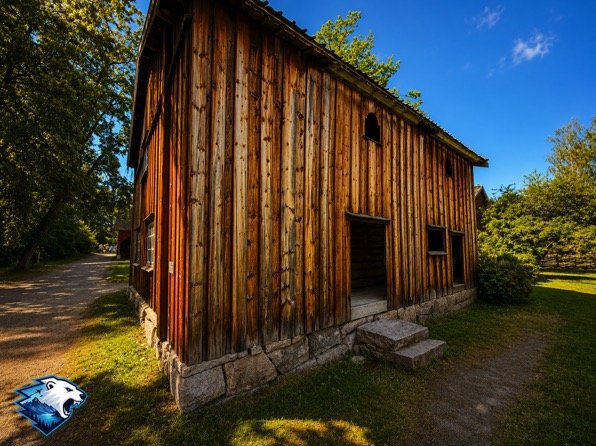
Here's something worth knowing before you go, so you're not disappointed: many of the buildings are locked, and you can only view them from the outside. This makes sense from a preservation point of view — these are genuinely old, often fragile structures — but it's worth setting your expectations accordingly.
For unlocked buildings, you can typically step inside, but rooms are often set up with a glass barrier or a rope to prevent visitors from going further in and touching the furnishings. It's a sensible trade-off: you still get a proper look at how the rooms were furnished and lived in, without risking damage to genuine period pieces. It's worth mentioning that this isn't unique to Norsk Folkemuseum — other visitors touring with guides have mentioned the same disappointment at finding certain buildings closed on the day, so it's clearly a fairly common and unavoidable part of preserving buildings this old.
Costumed Actors, Demonstrations, and Historic Dancing
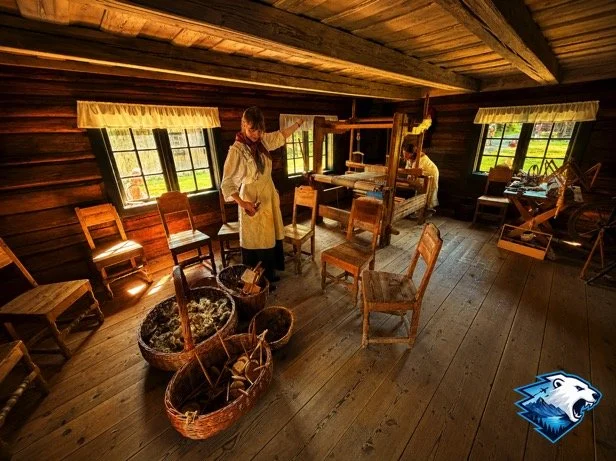
One of the nicer touches is the use of actors in period costume dotted around the site, demonstrating traditional skills rather than just standing beside a plaque. I came across a woman demonstrating traditional weaving, which was a great way to actually see a historic craft in action. On top of that, there was historic dancing being performed by costumed actors elsewhere on site — a fun, unexpected bit of entertainment that broke up the walking and gave a real sense of what social life would have looked like in these communities. Keep an eye on the museum's daily activity programme when you arrive, since these demonstrations tend to run at set times rather than continuously throughout the day.
The Church, the School, and the Shops
A few further highlights stood out for me:
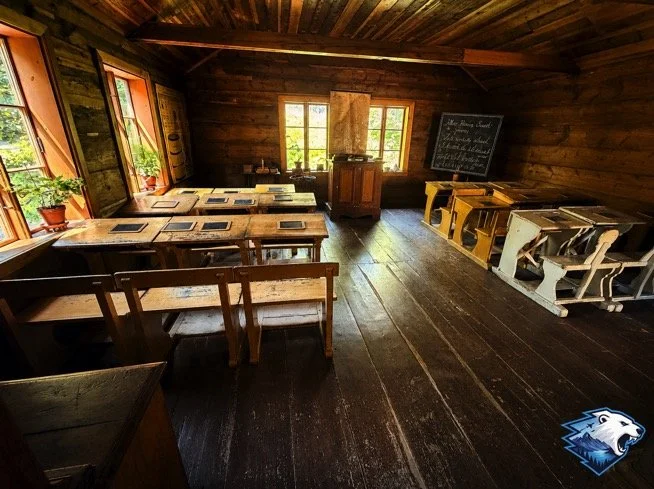
A historic schoolroom — set up to show what Norwegian education looked like generations ago, complete with period-accurate desks and teaching materials.
Period shops, including a confectionery shop with a proper old-fashioned, retro look. What I liked here is that it isn't just a static display — it has actual sweets and products for sale, so you can buy a bit of Norwegian confectionery as a genuine souvenir rather than just looking at a mock-up behind glass.
Accessibility: Steep Steps, Low Doorways, and Long Walks
This is the part of the review I think matters most for anyone planning a visit, and it's an area worth being upfront about before you go, especially if you're travelling with someone who has mobility difficulties, uses a wheelchair, or struggles with long walks.
Steep Steps and No Wheelchair Access in Some Buildings
Several of the historic buildings are only reachable via steep, narrow steps, with no ramps or wheelchair access whatsoever. This is understandable, given that these are genuine buildings, often several hundred years old — they weren't built with modern accessibility in mind, and retrofitting a ramp onto a 200-year-old farmhouse isn't really an option. Still, if accessibility is a priority for your visit, be aware that a fair number of the smaller buildings simply won't be reachable for wheelchair users or anyone unsteady on steps.
Low Doorways and Ceilings
Inside some of the older buildings, doorways, entranceways, and ceilings are very short, to the point where you'll need to crouch or duck to get through. This is a genuine feature of historic Norwegian building styles rather than a design flaw, but it's worth knowing in advance, particularly if you're tall or visiting with anyone who has difficulty bending down.
Steep Slopes and Long Walking Distances
The museum grounds themselves involve some steep slopes, particularly around the stave church, which sits on raised ground. The museum's own visitor information acknowledges that parts of the site are steep or have terrain that can be challenging for wheelchair users, and that access to certain historical buildings is limited as a result. On top of the slopes, be prepared to walk a considerable distance between buildings — this is a large open-air site, not a compact indoor museum, so comfortable walking shoes are essential.
My honest advice: budget more time than you think you'll need, wear proper footwear, and, if mobility is a concern for anyone in your group, check the museum's accessibility page in advance so you know which specific areas are step-free before you commit to a full day out.
Norsk Folkemuseum vs Beamish Museum: How Do They Compare?
If you've been to Beamish Museum in County Durham, England, you'll already have a feel for what an open-air museum experience is like — and interestingly, the two are more connected than you might think. Beamish's founder, Frank Atkinson, visited Scandinavian folk museums in the early 1950s for inspiration before creating Beamish, so Norsk Folkemuseum arguably helped shape the UK's most famous living museum.
Here's how they stack up against each other in practice:
Focus and Time Period
Norsk Folkemuseum spans a much wider timeframe — from a 12th-century stave church right through to 20th-century apartment living — with buildings pulled from right across Norway to represent different regions and social classes. Beamish, by contrast, is more tightly focused on North East England during the 1820s, 1900s, and 1940s–1950s, giving it a narrower but arguably deeper dive into a specific place and period.
Costumed Interpreters and Demonstrations
Both museums lean heavily on costumed staff to bring history to life rather than relying purely on information boards. At Norsk Folkemuseum, I saw weaving and historic dancing demonstrations. Beamish takes this even further, with costumed "engagers" running a working farm, a pit village with an actual drift mine, a sweet shop, a bakery, and even a dentist's surgery, all staffed and operating as they would have done historically.
Getting Around
This is one of the biggest practical differences. Norsk Folkemuseum is compact enough to walk around entirely on foot, though the steep slopes and distances mentioned above make it challenging. Beamish is considerably larger, covering around 350 acres, and provides vintage trams and buses that run on a circular route to help visitors get between the different time-period zones — genuinely useful given the scale of the site.
Accessibility
Neither museum is fully step-free, largely for the same reason: both are built around genuine or faithfully reconstructed historic buildings that predate modern accessibility standards. Beamish offers free wheelchair hire and accessible routes around its main areas, and Norsk Folkemuseum's visitor centre and main square are similarly step-free, but in both cases some individual historic buildings remain difficult or impossible to access for wheelchair users.
Which Is Better?
Honestly, it depends what you're after. If you want a broad sweep of Norwegian history and architecture in a few hours, Norsk Folkemuseum is hard to beat, especially paired with the other Bygdøy museums nearby. If you want a full day of hands-on, immersive history focused on one specific place and era, Beamish's sheer scale and depth of costumed activity is tough to match. Fans of one will very likely enjoy the other.
Food and Drink at the Museum Café ☕🍦
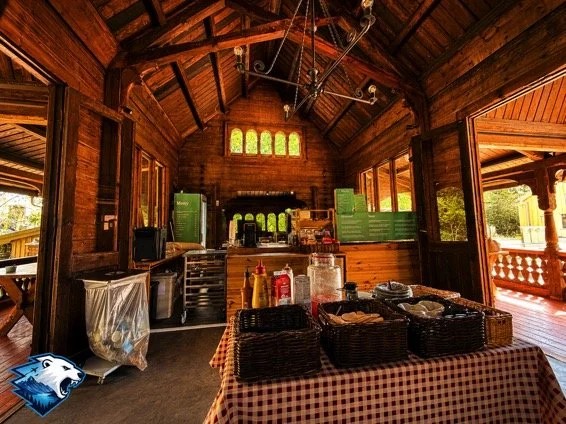
There's a café on-site selling fairly basic food, ice cream, and drinks — handy if you're spending a few hours wandering around and need a break.
One small detail that stood out to me: they sell RC Cola. I hadn't seen this drink in the UK before, but I had come across it in Pakistan, so it was an unexpected bit of nostalgia in the middle of an open-air museum in Norway. If you're a soft drink enthusiast, it's a nice little extra to try.
Is Norsk Folkemuseum Worth Visiting? My Verdict ✅
Overall, I'd recommend Norsk Folkemuseum to anyone visiting Oslo who is interested in history or culture, or who just wants a change of pace from the usual city-centre attractions. Here's a quick summary of what to expect:
Cost: 200 NOK per adult (approx. £15.25 / $19.50)
Getting there: Taxi (~137 NOK / £10.50 / $13.50), the number 30 bus, or the seasonal ferry from Rådhusbrygge
Booking: Easy to book as a walk-in at the desk, or online in advance
Entry: Simple turnstile system, scan your ticket and you're in
Highlights: The Stave Church from Gol, historic farmhouses, the 20th-century apartment building, the schoolroom, and costumed demonstrations including weaving and historic dancing
Limitations: Many buildings are locked from the inside, and those you can enter often have barriers restricting how far you can go
Accessibility: Some buildings have steep steps and no wheelchair access, doorways and ceilings can be very low in places, and there are steep slopes plus long walking distances between buildings
Food: A café with basic snacks, ice cream, and drinks, including the unexpected surprise of RC Cola
How it compares: Broader historical sweep than Beamish, but on a smaller, more walkable site — both are strong choices depending on what you want from your visit
If you're after a few hours of genuine Norwegian history, set in a relaxed outdoor setting on the edge of the city, Norsk Folkemuseum delivers. Just don't expect to wander freely through every building, and do factor in the steep terrain and walking distances if accessibility is a concern for anyone in your group. Treat it as a museum where you look, learn, and take your time, rather than one you rush through, and you'll get a lot more out of it.
Planning your Oslo trip? Bygdøy is also home to the Viking Ship Museum, the Fram Museum, the Kon-Tiki Museum, and the Norwegian Maritime Museum, all within walking distance of each other — so it's easy to turn this into a full day out if you want to make the most of the ferry or taxi journey over.
More from Oslo
- 🛍️ Oslo Fashion Outlet Review: My Honest Verdict on Norway's Popular Outlet Mall — worth the shuttle bus from Oslo S?
- ✈️ UK Holiday or Holiday Abroad in 2026? — how a trip like this stacks up on cost