UK Holiday or Holiday Abroad in 2026? The Real Cost Comparison This Summer
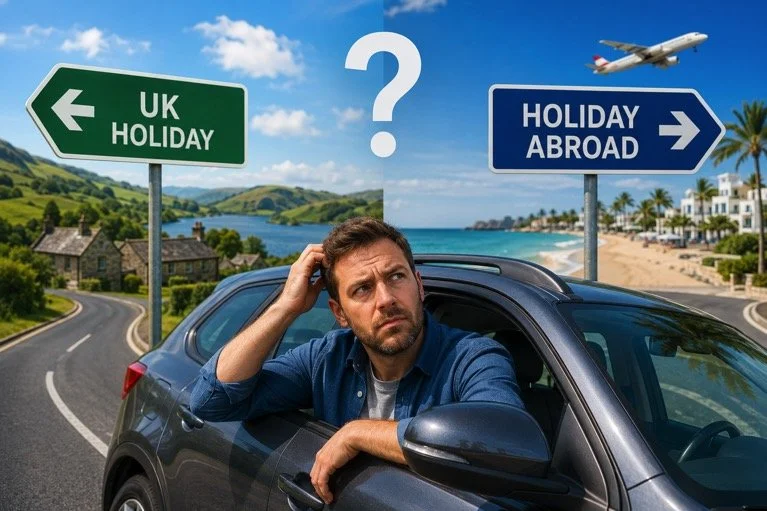
Every June, the same debate kicks off in households across Britain: do we book somewhere hot and far away, or do we just stay put and explore the UK instead? It's not a new question — but this summer, it comes with a genuinely different backdrop. Flights abroad are more expensive than they've been in years, the news has been full of stories about Gulf airspace closures, and even a "simple" UK staycation isn't quite the cheap fallback it used to be.
So which one actually makes sense for you this year? The truthful answer is: it depends — but not in a vague, dodge-the-question way. There are specific, current reasons flying abroad costs more right now, and specific, often overlooked reasons a UK break can end up pricier than you'd expect too. This guide walks through both sides properly, with real numbers, so you can make the call with your eyes open rather than just guessing. 🌍🏡
Why Flights Abroad Cost More This Summer 💰✈️
Let's deal with the big one first, because it's the reason this question feels different in 2026 than in previous summers.
The Gulf Conflict and Soaring Fuel Costs
Since late February 2026, a conflict involving Iran has thrown the aviation industry into chaos. The closure of the Strait of Hormuz — a narrow waterway that normally handles around a fifth of the world's oil and gas trade — sent crude oil prices surging, and jet fuel followed close behind. At one point, the global average jet fuel price more than doubled in just five weeks, and while a ceasefire has eased the worst of it, prices remain well above where they started the year.
Because fuel typically accounts for a large share of an airline's costs, this directly affects ticket prices. The average international airfare from major markets rose noticeably year-on-year by spring 2026, and airline industry profits are expected to roughly halve across 2026 compared with the year before, driven largely by the sharp rise in fuel costs. Airlines aren't absorbing that hit quietly — they're passing a good chunk of it on to passengers through higher base fares and fuel surcharges that get reviewed every few weeks.
This isn't confined to flights actually going to the Middle East, either. Routes between Europe and Asia, Australia, and parts of Africa that normally connect through Dubai or Doha have had to reroute around the disruption, burning more fuel and adding flight time — and that cost shows up in your fare regardless of your final destination.
Flights Are Still Genuinely Disrupted — Not Just More Expensive
This is the part that's easy to underestimate if you haven't been following the news closely: the situation in the Gulf hasn't been a one-off shock that's settled down. A ceasefire reached in April 2026 broke down, and fresh strikes hit Kuwait and Bahrain in early June. As of late June 2026, most Gulf airspace is technically open again, but aviation safety monitors describe it as "open but disrupted" — short-notice restrictions, GPS interference, and managed flight corridors remain the norm rather than the exception. Several countries, including Iran, Iraq, Lebanon and Syria, remain under full avoidance advisories, and even reopened hubs like Dubai have seen brief alerts and held flights as recently as early June.
If your trip touches this region — even just as a connecting point — there's a real, current chance of delays, rerouting, or cancellation. That's stressful in itself, but the bigger issue is what happens to your money when it happens.
The Insurance Gap Nobody Tells You About ⚠️
Here's the bit that catches people out: most standard travel insurance policies — including the one bundled into your bank account or credit card — exclude war and conflict-related disruption. If the UK Foreign, Commonwealth & Development Office (FCDO) advises against travel to a destination, your everyday policy may not pay out at all if your flight is cancelled or you're stuck abroad. That can mean covering emergency hotels, rebooking, or even a flight home entirely out of your own pocket — at exactly the moment you can least afford a surprise bill.
This isn't a hypothetical. It's been a real problem for thousands of travellers caught out by Gulf airspace closures since February.
Some Airlines Are Finally Closing the Gap
In a genuinely useful development, Emirates has launched the first airline-backed insurance policy that explicitly covers conflict-related disruption. Going on sale on 17 June 2026, the policy reimburses up to $25,000 in medical expenses related to conflict incidents, in addition to the trip cancellation, baggage, and emergency medical cover you'd expect from a standard policy.
The most useful detail is this: the cover applies even when there's an official government travel advisory in place, and during major disruptions, Emirates will arrange hotel accommodation and rebook affected passengers onto other airlines. Etihad has taken a similar step, partnering with Abu Dhabi's tourism authority to provide free medical travel insurance for international visitors flying into the city through the rest of the year.
It's a sign of how seriously airlines are now taking this risk — and it means that if you're flying through or to a region with any geopolitical sensitivity, it's worth actively checking whether your airline offers (or your insurer covers) conflict disruption, rather than assuming a standard policy has your back. If it doesn't, you're flying without a proper safety net.
Air Passenger Duty: A Tax You Simply Can't Avoid
Even leaving the Gulf situation aside, every flight departing a UK airport carries Air Passenger Duty (APD) — a government tax baked straight into your ticket. Rates went up again from April 2026, and they're not small:
🟢 UK domestic flights: £8 (economy)
🟢 Short-haul, e.g. most of Europe: £15 economy, £32 premium
🟠 Long-haul, e.g. USA, Caribbean: roughly £102–£106 economy, rising steeply in premium cabins
🔴 Ultra long-haul, e.g. Australia, parts of Asia: the highest band, with premium passengers facing the biggest jump
For a family of four flying long-haul, that's an unavoidable few hundred pounds added before you've even chosen a seat. You can check the latest figures yourself on the official GOV. UK APD rates page — it's worth doing before you commit to a long-haul booking, since the rate alone can shift your decision between destinations.
Getting To the Airport Costs More Than You Think
Before you've even checked in, there's the cost of simply reaching the airport. Drop-off charges at most major UK airports now run to several pounds for the briefest of stops, and a week's worth of short-stay parking at peak summer dates can easily cost £30–£60. Need an early flight and a hotel the night before? Add that on too. None of this shows up in the headline flight price, but it's real money leaving your account before your holiday has even started.
The Extras That Quietly Double Your Fare
Budget airlines have built their entire pricing model around a cheap-looking base fare and charge extra for everything else. Hold luggage, choosing your own seat, and — increasingly — simply being guaranteed a seat next to your own family can all carry separate charges. For a family of four, these add-ons can turn a £200 "bargain" fare into £400 or more once everyone has a bag and is sitting together. Always price the full trip — not the headline number — before comparing it to anything else.
Some Destinations Are Just Expensive, Regardless of the Year
Even without any of the above, certain places are pricey once you land, full stop. Switzerland is notorious for the cost of meals, transport, and hotels, driven by a strong currency and high domestic cost of living. Dubai, despite tax-free shopping, has a luxury-leaning hospitality scene where five-star hotels and fine dining set the tone for prices across the board. If you're drawn to destinations like these, it's not a 2026-specific issue — it's simply worth budgeting for, honestly, rather than being surprised at checkout.
Your Passenger Rights May Help, But They Have Limits
If your flight is cancelled, UK passenger rights may entitle you to a refund, rerouting, meals, accommodation, transport and communication support depending on the circumstances. However, compensation is more limited when disruption is caused by extraordinary circumstances outside the airline’s control, such as political instability, severe weather, air traffic control disruption or similar events.
In plain English: you may be looked after, but you may not always get compensation.
That distinction matters. A cancelled flight can still ruin the first two days of a holiday, even if you eventually receive a refund or replacement flight.
So, is a UK Staycation Actually Cheaper? Not Always 🏴🤔
Given everything above, you might assume staying home is the obvious money-saver. It often is — but not as automatically as people assume, and there are a few very British costs that quietly chip away at the savings.
VAT Is Already Baked Into Everything You Book
Every hotel stay, every restaurant meal, and most attraction tickets in the UK include 20% VAT, which is included in the price you see. It's invisible because it's already in the number — but it means you're effectively paying a fifth more than the "raw" cost of your trip, on top of everything else. Compare that to some of your favourite European destinations, where VAT (or its local equivalent) can sit notably lower, especially on hospitality.
Fuel Duty and Parking Make Driving Holidays Pricier Than They Feel
If your UK trip involves driving rather than flying, you're not escaping tax either — fuel duty in the UK remains one of the highest in Europe, and that's before fuel companies add their own margin on top. Add inner-city parking charges, which in places like London, Bath, or Edinburgh can comfortably exceed a day's worth of attraction tickets, and a "free" road trip starts adding up fast.
It Can Genuinely Feel Like You Never Left Home
This is less about money and more about the actual experience — but it matters. Different town, same Greggs, same Tesco Express, same weather forecast, same news on the radio. For some people, that's exactly the point: low stress, no passport queues, no time difference. For others, it's precisely why a UK break can feel a bit flat compared to the genuine change of scenery, language, food, and culture that travelling abroad offers. Neither reaction is negative — it's just worth being honest with yourself about which camp you're in before you book.
UK Hotels Rarely Cater for Groups the Way You'd Expect
Here's a cost trap that catches out a lot of families and friend groups: UK hotels overwhelmingly default to rooms for one or two people. Travelling as three? In many UK hotels, that means booking two separate rooms — at nearly double the total cost — rather than one larger room with an extra bed, which is far more common in much of Europe, the US, and Asia. Always check "max occupancy" before you book a UK stay with more than two people; it can completely change your budget comparison with going abroad, where family or triple rooms are often standard, modestly priced options.
UK Attractions Aren't Always the Budget Option You'd Hope For
Family attractions in the UK can be surprisingly expensive once you add it all up. Take Chester Zoo, one of the country's most popular family days out: a standard adult ticket booked online runs to around £34–£38, with walk-up prices reaching £42.50. A family ticket helps — Chester Zoo's own family offer can knock up to £33 off a group of three or four — but even with that discount, a family of four is still looking at the best part of £100 for a single day out, before parking, food, or the inevitable gift shop stop. Multiply that across a week of UK attractions and the gap between "cheap staycation" and "pricey holiday abroad" narrows considerably.
Where a UK Holiday Wins
Less Travel Stress
A UK holiday removes many of the stress points linked to international travel. There is no need to check passport validity, airport liquid rules, airline baggage limits, visas, entry requirements or foreign driving rules.
You can pack more. You can leave when you want. You can come home early if needed. You can take your dog. You can avoid airport security, flight delays and the worry of being stuck overseas.
For families with babies, toddlers, elderly relatives or nervous flyers, that simplicity can be worth a lot.
More Flexibility
UK holidays are easier to adjust. If the weather looks terrible, you can sometimes change plans more easily. If someone becomes ill, you are still close to home. If you forget something, you can usually buy it without much difficulty.
This flexibility is useful for short breaks. A three-night UK break can feel easy. A three-night trip abroad can feel rushed once you add airport travel, security, transfers and flight times.
Better for Dogs and Multi-Generational Trips
The UK is often a strong choice for dog owners and extended families.
A cottage, lodge, caravan, holiday park or large rental house can work well when you need several bedrooms, a kitchen, parking, laundry facilities and space for children or pets.
For groups, self-catering can also reduce food costs. Breakfasts, packed lunches and a few home-cooked dinners can make a big difference compared with eating every meal in restaurants.
Great for Nature, Coast and Slow Travel
The UK is underrated for scenery. Cornwall, Devon, Dorset, Northumberland, the Lake District, the Scottish Highlands, Snowdonia, Norfolk, the Yorkshire coast and the Cotswolds all offer memorable holidays.
A UK holiday works especially well when it is built around walking, beaches, gardens, heritage, cycling, food, theatre, festivals, or family time rather than guaranteed heat.
Where Travelling Abroad Wins
Better Weather and a Stronger Sense of Escape
The biggest reason many people choose a holiday abroad is simple: sunshine.
A week in Greece, Spain, Portugal, Turkey or Cyprus is more likely to offer warm evenings, outdoor dining, pool time and beach weather than a week in the UK.
The cultural difference also matters. Different foods, architecture, languages, landscapes, and customs can make even a short trip feel refreshing.
All-Inclusive Can Make Budgeting Easier
For families, all-inclusive holidays abroad can be attractive because the main costs are known before departure.
Flights, transfers, accommodation, meals, drinks, snacks, kids’ clubs and entertainment may all be included. That can reduce the “tap, tap, tap” spending that occurs on UK holidays, when every coffee, ice cream, parking ticket, and activity is paid for separately.
All-inclusive is not always the cheapest option. But it can be easier to control.
Some Destinations Are Still Better Value Than the UK
Not every holiday abroad is expensive. Some European destinations can be excellent value once you arrive.
The Post Office Travel Money City Costs Barometer 2026 compared common tourist costs across 50 European cities and found that cheaper destinations were heavily concentrated in Eastern Europe, with Sarajevo ranked as the cheapest city in the survey.
Beach destinations can also be good value. The Post Office Holiday Money Report has previously highlighted the Algarve as a strong-value destination, including relatively low meal costs compared with many other holiday spots.
So while flights may cost more this summer, the overall cost of the holiday can still be competitive if accommodation, eating out, and local transport are cheaper than in the UK.
Abroad Can Offer More Suitable Accommodation
For families and groups, travelling abroad can sometimes solve the hotel-room problem.
Apartments, villas, aparthotels, triple rooms and family suites are common in many holiday destinations. A family of five, three adults, or grandparents travelling with children may find better accommodation options abroad than in a standard UK hotel.
This is especially true in resort areas designed around family tourism.
Where Travelling Abroad Can Become Very Expensive
Expensive Destinations Can Cancel Out Any Flight Deal
Some destinations are expensive before you even start. Switzerland is a classic example. Zurich is regularly ranked among the world’s most expensive cities, and Switzerland has high costs for accommodation, transport, goods and services.
Dubai can also become expensive depending on how you travel. Flights may be competitive, but hotels, restaurants, beach clubs, brunches, taxis, attractions, and premium experiences can quickly raise the final cost.
The lesson is simple: do not assume “abroad” means cheaper. Spain, Portugal, Poland or Albania may offer strong value. Switzerland, Iceland, parts of Scandinavia, Dubai, Monaco or peak-season Greek islands may not.
Currency and Card Fees Can Add Extra Cost
Exchange rates matter. A destination that looked affordable when you booked may feel more expensive by the time you travel.
Card fees, cash withdrawal fees and poor airport exchange rates can also add avoidable costs. Using a travel-friendly card and avoiding last-minute currency exchange at airports can help keep spending under control.
Local Tourist Taxes and Resort Fees
Many destinations now charge tourist taxes, city taxes or resort fees. These may be small per person per night, but they can add up for families or longer stays.
Always check whether your hotel bill includes local taxes or whether you pay them separately at check-in or check-out.
Other Factors Worth Weighing Up, Both Ways ⚖️
Beyond the headline costs, a few other things genuinely tip the decision one way or the other, depending on what matters most to you.
In favour of staying in the UK:
No passport, visa, or currency exchange hassle
No risk of flight cancellation stranding you somewhere unfamiliar
Easier with pets — no kennels or pet passports needed
Mobile data and the NHS work exactly as you'd expect
Far easier to change plans at the last minute if work or family life intervenes
In favour of going abroad:
Guaranteed sunshine in destinations where the UK can't promise it
Often cheaper food, drink, and activities once you're away from the obviously tourist-expensive spots (much of Eastern and Southern Europe, for instance, remains noticeably cheaper than UK city-break pricing)
A genuine change of scenery, culture, and pace that a domestic break doesn't always deliver
Many package holidays bundle flights, transfers, and accommodation in a way that can work out cheaper overall than a self-arranged UK trip, once you've added up hotels, car hire, and attractions separately
How to Decide: A Practical Checklist ✅
Rather than treating this as an abstract debate, run your own trip through these questions:
Does my route touch the Middle East or any region with an active travel advisory? If yes, check whether your airline offers conflict-disruption cover, and read your travel insurance policy's war exclusions before you book anything non-refundable.
Have I priced the full flight cost — including APD, baggage, seat selection, and airport parking or transfers — rather than just the headline fare?
If I'm staying in the UK with more than two people, have I checked hotel occupancy limits rather than assuming one room will do?
Have I added up attraction and activity costs for the whole trip, not just the flagship day out, since these can rival the cost of flying somewhere with lower on-the-ground prices?
What do I actually want from this holiday — guaranteed weather and a change of scene, or low-stress simplicity and no risk of disruption? Be honest about this one; it often matters more than the spreadsheet.
The Bottom Line
There's no single right answer here, and anyone telling you that going abroad is "always cheaper" or that the UK is "always isn't being” isn't being straight with you. What's true for 2026 specifically is that flying abroad carries a higher price tag and a genuine — albeit currently easing — risk of disruption, thanks to the Gulf conflict's effect on fuel prices and airspace. It's also true that a UK staycation has its own hidden costs, from VAT-loaded hotel bills to surprisingly steep attraction pricing and a hotel industry that isn't built for groups of three.
The smartest move is the one most people skip: actually add up the real total for both options — flights with every extra included, insurance that matches your actual route risk, and UK accommodation priced for your real group size — before deciding. Once you've done that side by side, the right choice for your summer usually becomes pretty obvious. 🧳☀️