Would You Buy a Chinese Car? Why More UK Drivers Are Saying Yes in 2026
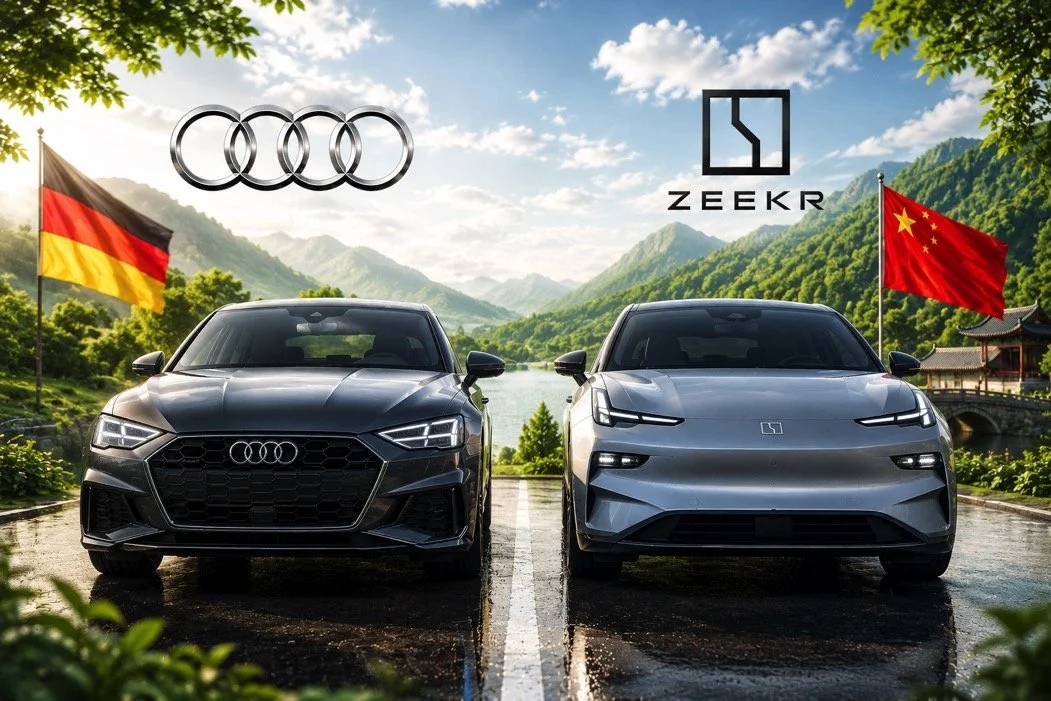
A few years ago, this question would have got you laughed out of the pub. Today, it's the conversation half my friends are having over the garden fence. 🚗⚡
Here's the dilemma a lot of us are facing right now: your shortlist for a new car used to write itself. German for prestige, Japanese for reliability, and if you wanted something a bit different, maybe American. Simple. Predictable. Safe.
Then EVs happened, and the rulebook got torn up.
I went through exactly this myself recently. My own shortlist for a new car came down to an Audi e-tron, a Tesla Model Y, and a Volvo EX40. Three good, sensible, "nobody will question you at a dinner party" choices. But somewhere along the way, a fourth option crept onto the list that wouldn't have even registered two years ago — a Chinese EV. And after test-driving one, I genuinely couldn't ignore it.
This post is my honest, no-fluff take on where things stand with Chinese cars in the UK in 2026 — the badge snobbery, the real-world experience of test driving one, and the genuine risks that come with being an early adopter. Whether you're weighing up a Polestar against a Tesla or wondering whether to even bother looking at the established brands, I hope this helps you think it through. Let's get into it. 👇
How We Got Here: A Quick History of "Acceptable" Car Brands
It's worth rewinding a bit, because the shift in attitude towards Chinese cars hasn't happened in isolation — it's the latest chapter in a story that's been rewriting itself for the last decade.
The Old Hierarchy: Germany, Japan, and Everyone Else
For a long time, the unwritten rules of buying a new car in the UK were pretty rigid. German engineering — BMW, Mercedes, Audi — sat at the top of the pile for anyone wanting a "proper" car with badge value. Japanese brands like Toyota, Honda, and Mazda owned the reliability conversation; nobody worried about a Corolla breaking down, but nobody got excited about driving one either.
Everything else — your Fords, your Vauxhalls, your Fiats — filled the "sensible but not aspirational" middle ground. Decent cars, fair prices, but never quite shaking off the idea that they're a notch below their German counterparts. That perception, fairly or not, hasn't really shifted even now.
Then EVs Changed the Game
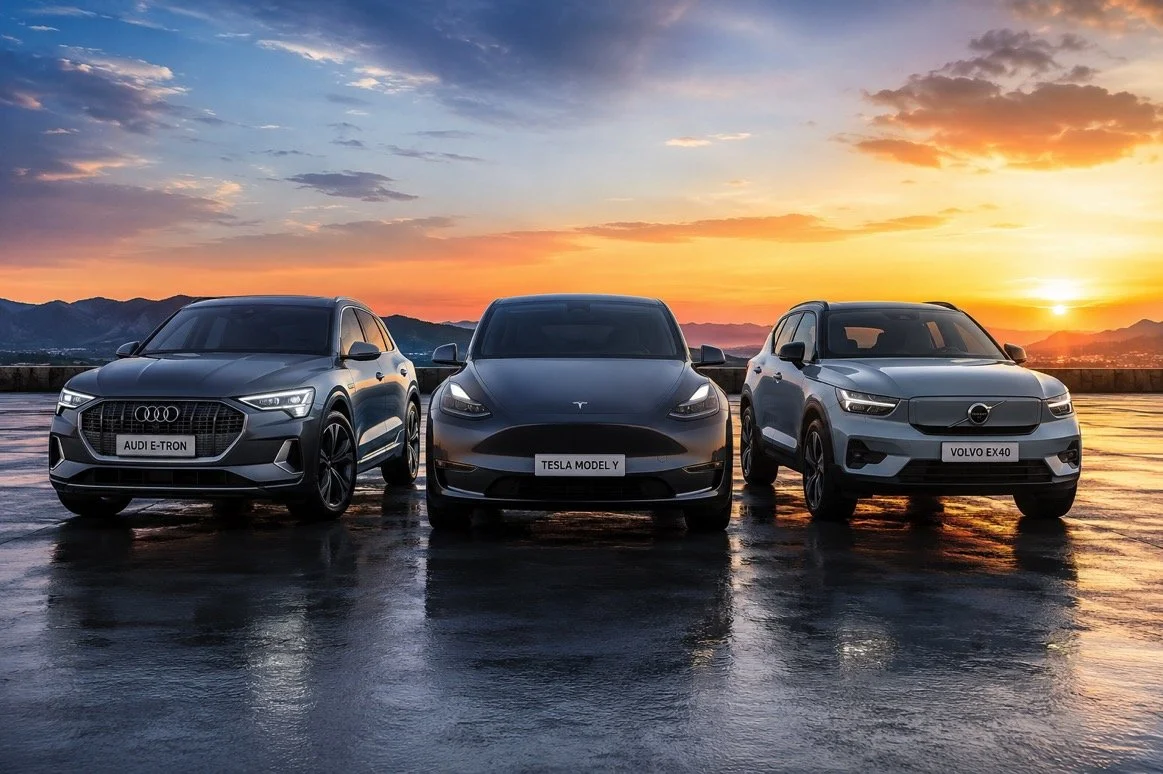
Tesla kicked the door open. Suddenly, there was a brand with zero heritage, zero badge snobbery to lean on, and yet it became the default answer to the question, "What electric car should I get?" The established manufacturers spent the best part of five years playing catch-up, and in some ways, they still are.
Pickup trucks had their own little moment in the spotlight too — the Mitsubishi L200 and Toyota Hilux became weirdly fashionable as lifestyle vehicles for a while, before drifting back to where they probably always belonged: building sites and farms, not the school run.
The Genesis Moment: When "It's Just a Hyundai" Stopped Being True
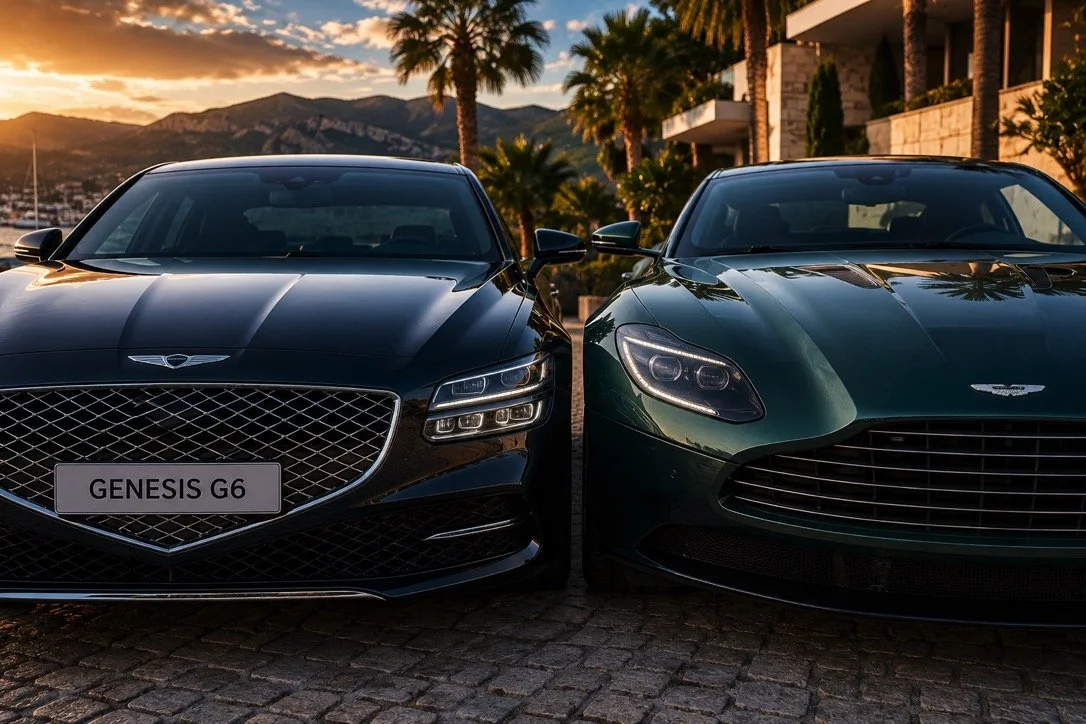
Here's where things started getting genuinely interesting for me. One of my friends — a die-hard Audi loyalist — switched to a Genesis. My first reaction was exactly what yours probably is: "Isn't that just a posh Hyundai?" I'd filed it away mentally the same way I'd always filed Lexus as "just a Toyota with leather seats."
Then I actually sat in it.
The interior was genuinely luxurious. Properly thought-through, with tech that didn't feel bolted on as an afterthought. For a while, people were even mixing the badge up with Aston Martin — heads were turning in car parks for a brand that, a few years earlier, most people in the UK had never heard of.
That was the first crack in the old hierarchy. It wasn't enough to dismiss a car by its parent company anymore. You had to actually look at what was in front of you.
Enter the Chinese Car Brands: My Test Drive Experience
Fast forward another year, and now it's not just Korean brands shaking things up — it's a genuine wave of Chinese manufacturers landing in UK showrooms. BYD, MG, Omoda, Jaecoo, Xpeng — the list keeps growing, and they're not messing about.
I recently test-drove the Xpeng G6 — the standard rear-wheel-drive version rather than the AWD Performance model —, and I'll be honest — I went in expecting to be underwhelmed. I came out impressed.
What Surprised Me About the Xpeng G6
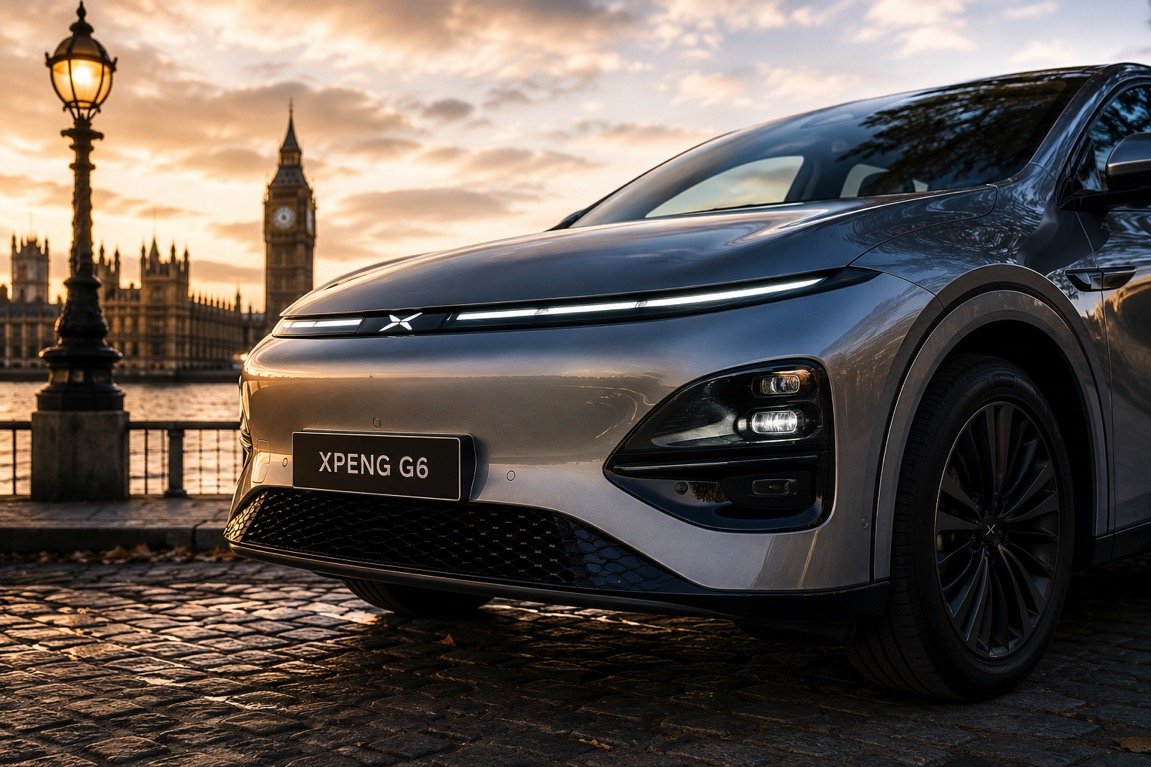
A few things stood out straight away:
The interior quality was genuinely posh. There's real attention to detail in the doors, dashboard, and seats. Everything felt comfortable, and nothing felt like it was cutting corners.
The sound system was fine. Online reviews had warned me it was a weak point, but to my ear, it was perfectly decent. Worth bearing in mind when you're reading reviews — what bothers one person might not bother you at all.
The drive was smooth. Not exciting, not thrilling, but composed and easy to live with — which, for most people doing a daily commute, is exactly what you want.
The price difference was eye-watering. The lease came in at over £300 a month less than an equivalent Audi. That's not a rounding error — that's a genuinely different financial proposition.
Now, I'm not naive about why that price gap exists. Xpeng has only just launched in the UK and is almost certainly using aggressive finance deals to build a foothold and get cars on driveways. The finance process itself was also noticeably quicker and more forgiving than what I've experienced with more established brands, which makes sense when a brand is hungry for market share rather than coasting on its reputation.
The Real Concerns: Dealer Networks and Long-Term Reliability
It wasn't all plain sailing, though, and these are the points anyone considering a Chinese EV in the UK genuinely needs to think through:
Dealer coverage is still thin. My nearest Xpeng dealer was 30 miles away. If something needs fixing and parts have to come from further afield, how long will that take? The car itself was quoted as being four months away from delivery, which raises a fair question about parts and aftercare turnaround times, too.
The warranty is generous, but what happens after it ends? Xpeng offers a 5-year warranty, which sounds reassuring on paper. But there's a genuine unknown hanging over every Chinese EV on the road right now: nobody quite knows how these cars will hold up once they're outside that warranty window. Will parts be readily available? Will independent garages know how to work on them? Will repair costs be reasonable, or eye-wateringly expensive imports? Right now, that's an honest "we don't know yet" — and you should go in with eyes open rather than assuming it'll be fine.
For me, leasing took a lot of that anxiety away. With a lease, you're not exposed to collapsing residual values if the brand's reputation doesn't hold up, and you're handing the depreciation risk back to the finance company rather than carrying it yourself. If you're tempted by a Chinese EV but nervous about the unknowns, leasing rather than buying outright is worth serious consideration.
The Badge Question: Does Prestige Still Matter?
Here's the bit that I think actually matters more than spec sheets and range figures: status.
A large core of my friends will simply never move away from BMW, Mercedes, or Audi. They're not really buying a car — they're buying what that badge says about them, and the assumed status that comes attached to it. There's nothing wrong with that; brand and badge have always been part of car buying, and probably always will be.
But the ground is shifting underneath that logic, and the Genesis example I mentioned earlier is proof of it. If a "lesser" badge can produce an interior and driving experience that genuinely competes with — or beats — the premium German alternative, the badge argument starts to wobble. It doesn't collapse entirely; plenty of people will always pay extra for the three-pointed star or the four rings. But the gap between "badge prestige" and "actual product quality" is narrowing, and Chinese manufacturers are walking straight through that gap.
The Twist Nobody's Talking About: Badge-Engineering Is Coming Both Ways
This is where it gets genuinely interesting, and it's something I keep coming back to.
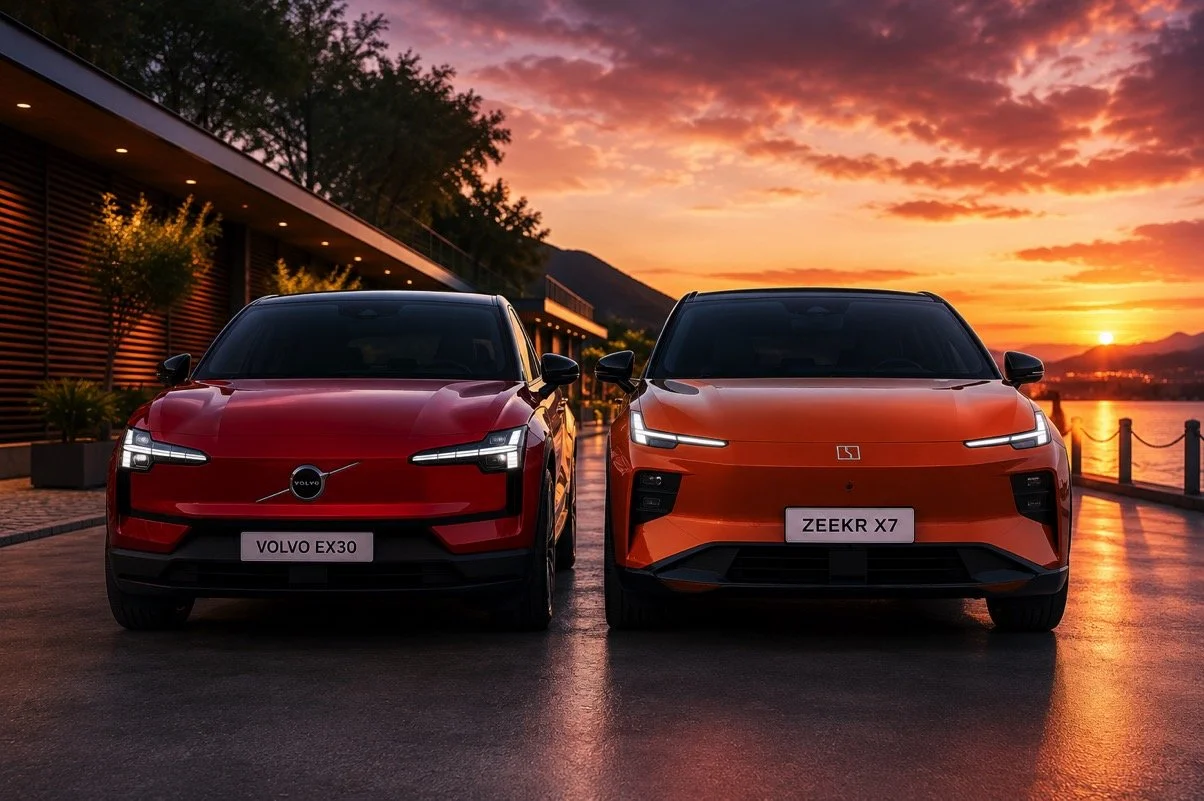
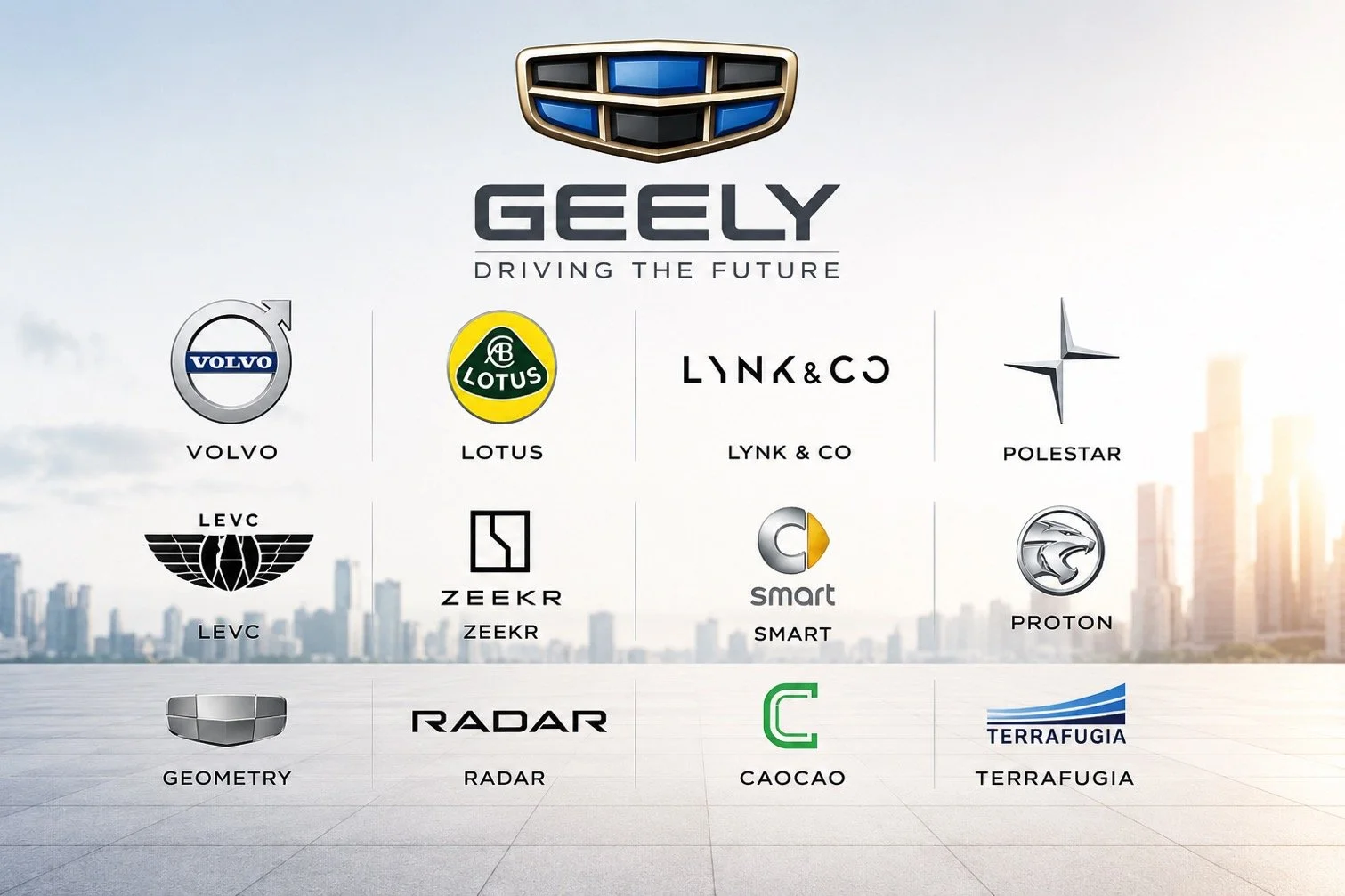
I currently own a Volvo EX30, which I bought largely on the strength of Volvo's styling and reputation for safety. Volvo is owned by Geely, the Chinese automotive giant that also owns Polestar, Lotus, and the Chinese performance brand Zeekr. Zeekr is confirmed to be launching in the UK in 2026, built on shared platforms and underpinnings with cars already on our roads.
So here's the question worth sitting with: are we heading towards a two-tier system where, underneath the bodywork — and sometimes even on the outside — we have two almost identical cars, wearing two different badges, with the only real difference being the perceived prestige of the name on the boot? If a Volvo and a Zeekr end up sharing a platform, a battery, and an engineering team, what exactly are you paying the premium for?
This isn't a hypothetical thought experiment. It's already happening with Polestar and Volvo. It's about to happen more visibly with Zeekr. And it completely upends the old assumption that "Chinese-owned" automatically means "lesser car."
Should You Buy a Chinese Car in the UK? Weighing It Up
Let's bring this together into something genuinely useful, because "it depends" isn't much help to anyone trying to make a decision this month.
Reasons to Consider a Chinese EV
✅ Significantly lower lease and finance costs compared to equivalent German or premium alternatives
✅ Interior quality and tech that genuinely competes with — and sometimes exceeds — established premium brands
✅ Generous standard equipment that often comes as an optional extra elsewhere
✅ Faster, more flexible finance approval processes from brands hungry to build UK market share
✅ Leasing removes most of the residual value risk, which is the single biggest financial unknown with a new brand
Reasons to Pause Before Committing
⚠️ Patchy dealer and service networks — convenience and turnaround time for repairs are genuine unknowns
⚠️ Unproven long-term reliability — we simply don't have years of UK ownership data yet
⚠️ Uncertain costs outside of warranty — parts, labour, and availability beyond the warranty period are a question mark
⚠️ Delivery times can be lengthy for newly launched brands still scaling up UK operations
⚠️ Badge perception still matters to some buyers — and that's a personal call, not a wrong one
My Honest Take
For me, I think it's time to take the plunge. The combination of price, lease protection against residual value risk, and genuinely impressive build quality has tipped the balance. I'm not blind to the risks — the warranty cliff-edge and patchy dealer network are real considerations — but leasing specifically addresses the bit that worried me most.
If you're someone who values badge prestige above all else, none of this will change your mind, and that's a completely valid way to spend your money. But if you're shopping with your head rather than your heart, 2026 is the year Chinese EVs genuinely deserve a place on your shortlist — not as a backup option, but as a serious contender.
Frequently Asked Questions About Buying a Chinese Car in the UK
Are Chinese cars reliable?
Short-term build quality on recent models like the Xpeng G6 has impressed reviewers and owners alike, with solid interior fit and finish. The honest answer on long-term reliability is that we don't yet have enough years of UK ownership data to say for certain — these brands are simply too new to the market.
Is it cheaper to lease a Chinese EV than buy one outright?
For most newly launched Chinese brands, yes — leasing is currently the lower-risk option. It protects you from depreciation if resale values prove weaker than those of established brands, while still letting you enjoy the lower monthly costs these manufacturers are currently offering to build UK market share.
What happens after the warranty on a Chinese car ends?
This remains one of the biggest unknowns in the entire category. Most Chinese brands offer competitive warranties — often 5 years as standard — but how affordable and accessible repairs are once that coverage ends remains an open question across the industry.
Are Volvo and Zeekr the same car underneath?
Not identical, but closely related. Both are owned by Geely, and as Zeekr launches in the UK, expect shared platforms and underlying technology across Geely's brand family — similar to how Polestar and Volvo already share engineering DNA.
Over to You
So, where do you stand? Are you ready to take the plunge on a Chinese EV, or are you sticking firmly with the established Western brands you know and trust?
Let me know in the comments below — I'd love to hear whether you've test-driven one of the new Chinese brands yet, and what tipped your decision one way or the other. 💬